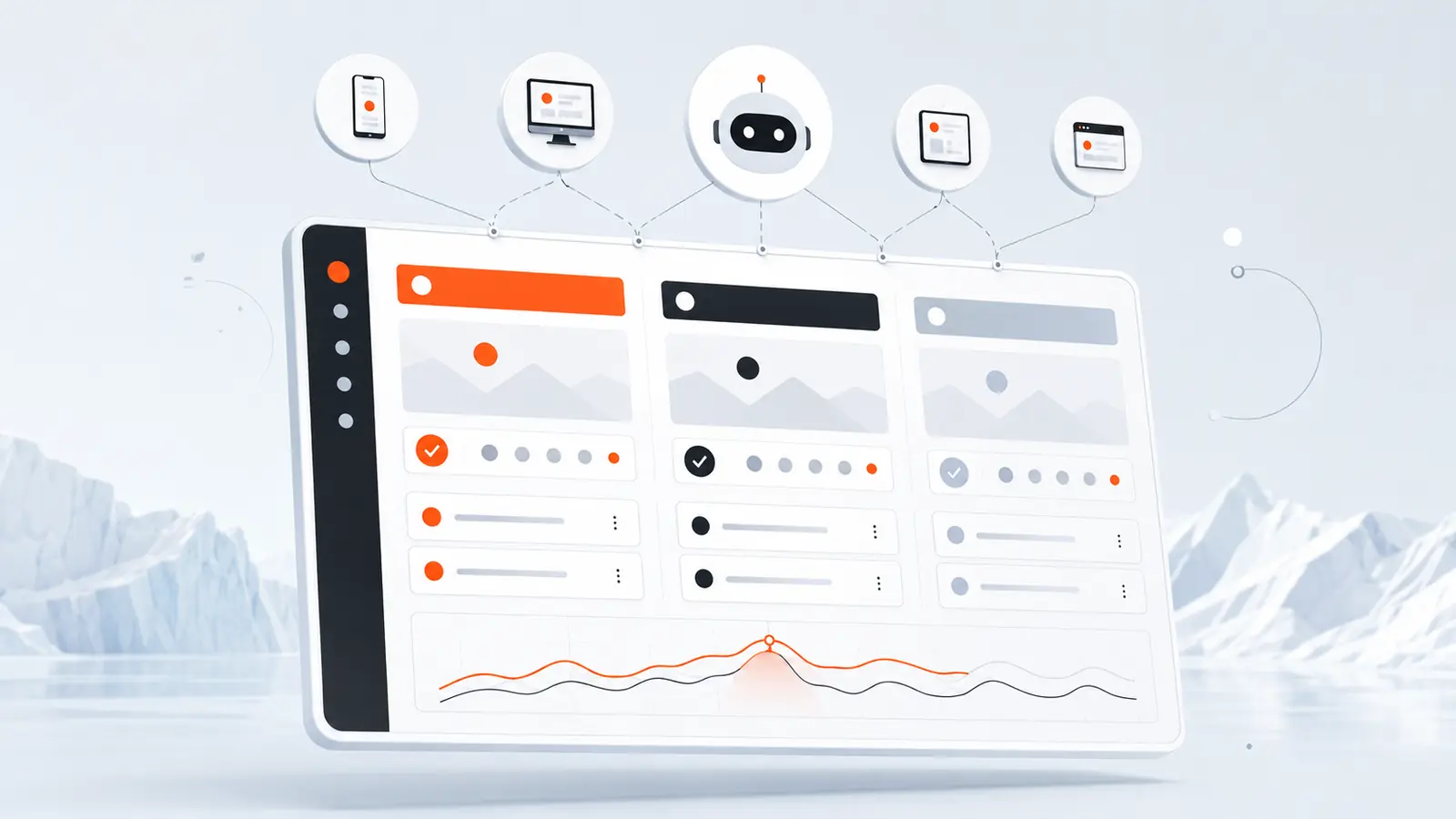
10 Ways AI Can Change an Ophthalmology Practice


10 Ways AI Can Change an Ophthalmology Practice
Artificial intelligence is changing every stage of an ophthalmology practice — how patients find you, how your phones get answered, how the doctor documents an exam, how an IOL gets selected, and how a hesitant LASIK patient finally says yes. This isn’t a prediction about the future. Every one of the ten changes below is available to practices today.
AI won’t replace your practice. But practices that use AI well are already pulling ahead of practices that don’t — answering inquiries faster, documenting faster, educating patients better, and showing up in places their competitors are invisible. Here are the ten changes that matter most, in the order a patient experiences them: from the moment they search for a surgeon to the day they’re treated.
1. AI Is How Patients Find You Now
Patients aren’t only Googling “cataract surgeon near me” anymore. They’re asking ChatGPT, Gemini, Perplexity, and Google’s AI Overviews to recommend a surgeon — and getting back a short, curated list of names instead of ten blue links. If your practice isn’t part of that answer, you’re invisible at the most influential moment of the decision.
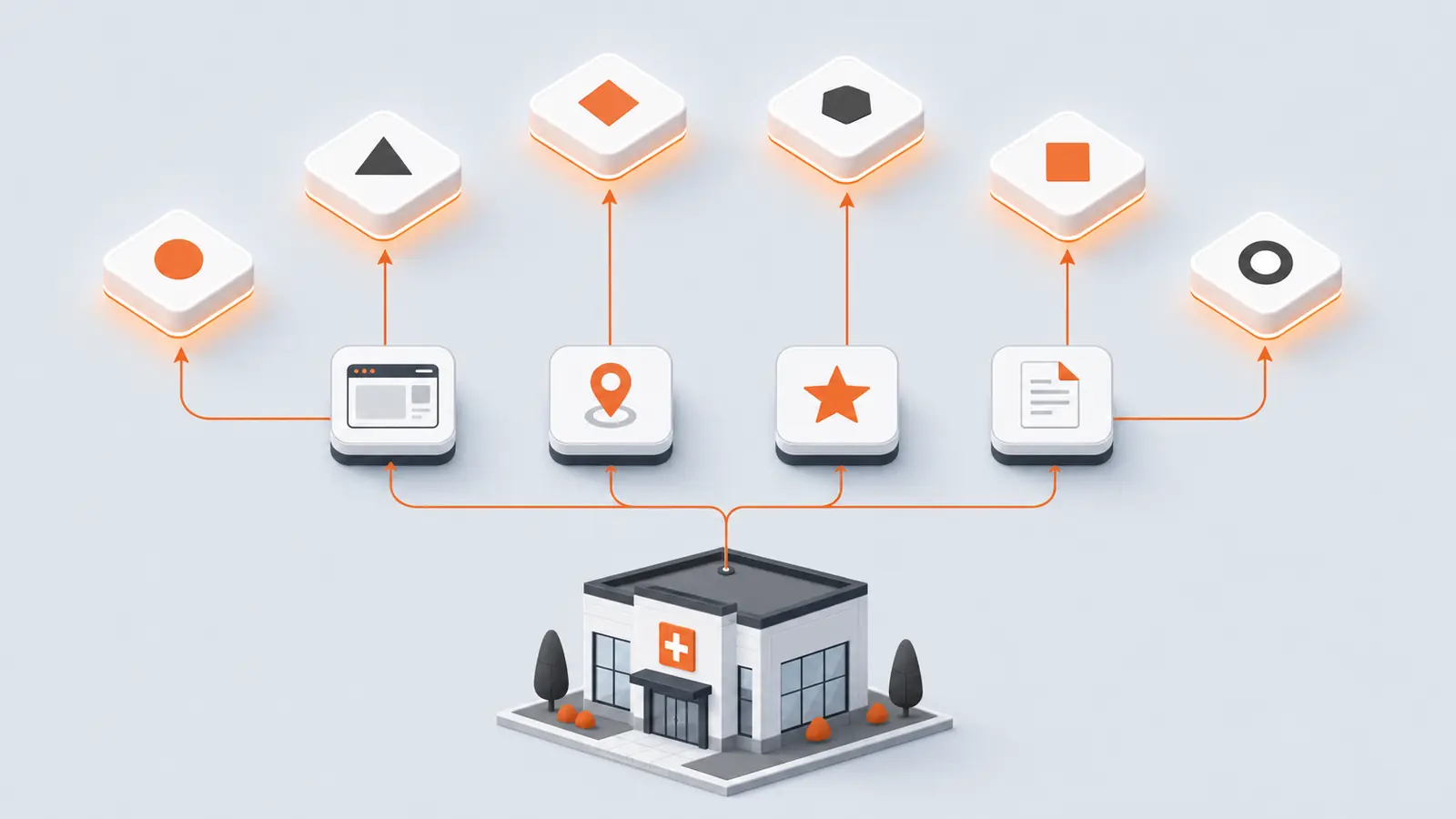
Being included isn’t luck. It’s the product of clear service pages, deep physician profiles, consistent business listings, credible third-party mentions, and a technically sound website. We covered this in depth in Why Your Practice Isn’t Showing Up in AI Search — if you read one companion piece to this article, make it that one.
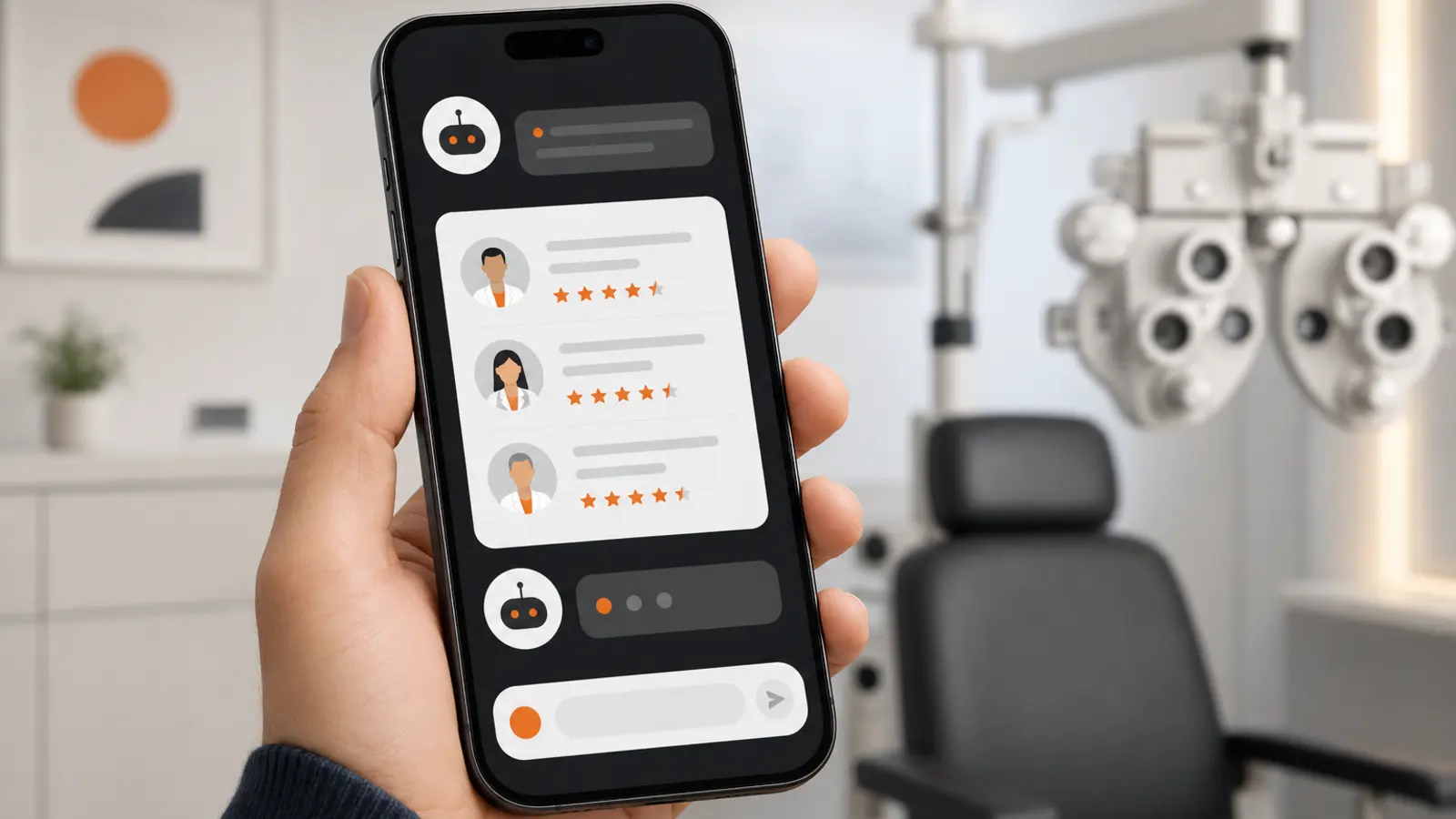
2. AI Agents That Answer and Book — 24/7
A LASIK lead that calls at 8:45pm doesn’t wait until morning. They call the next practice on the list. AI voice and chat agents change that math: they answer instantly, around the clock, handle the questions that fill your front desk’s day — “Do you take my insurance?” “How much is LASIK?” “Do you offer financing?” — and book the consultation on the spot.
The best implementations don’t replace your team; they catch what your team physically can’t: after-hours calls, overflow during clinic crunch, and the third simultaneous caller who would otherwise hit voicemail. In elective surgery, speed-to-answer is a competitive weapon, because the patient calling you is usually calling your competitors too.
3. AI Call Analysis on Every Phone Call
Most practices have no idea what happens on their phones. AI call analysis fixes that by reviewing and scoring every call: Was the caller asked for an appointment? Were premium options mentioned? Did a $6,000 LASIK inquiry get answered with a price and a shrug — or a scheduled consult?
Instead of sampling a handful of calls a month, you see conversion behavior across all of them, spot exactly which inquiries were mishandled, and know precisely what to coach. Pair the data with structured phone training and the same call volume starts producing measurably more consultations — before you spend another dollar on advertising.
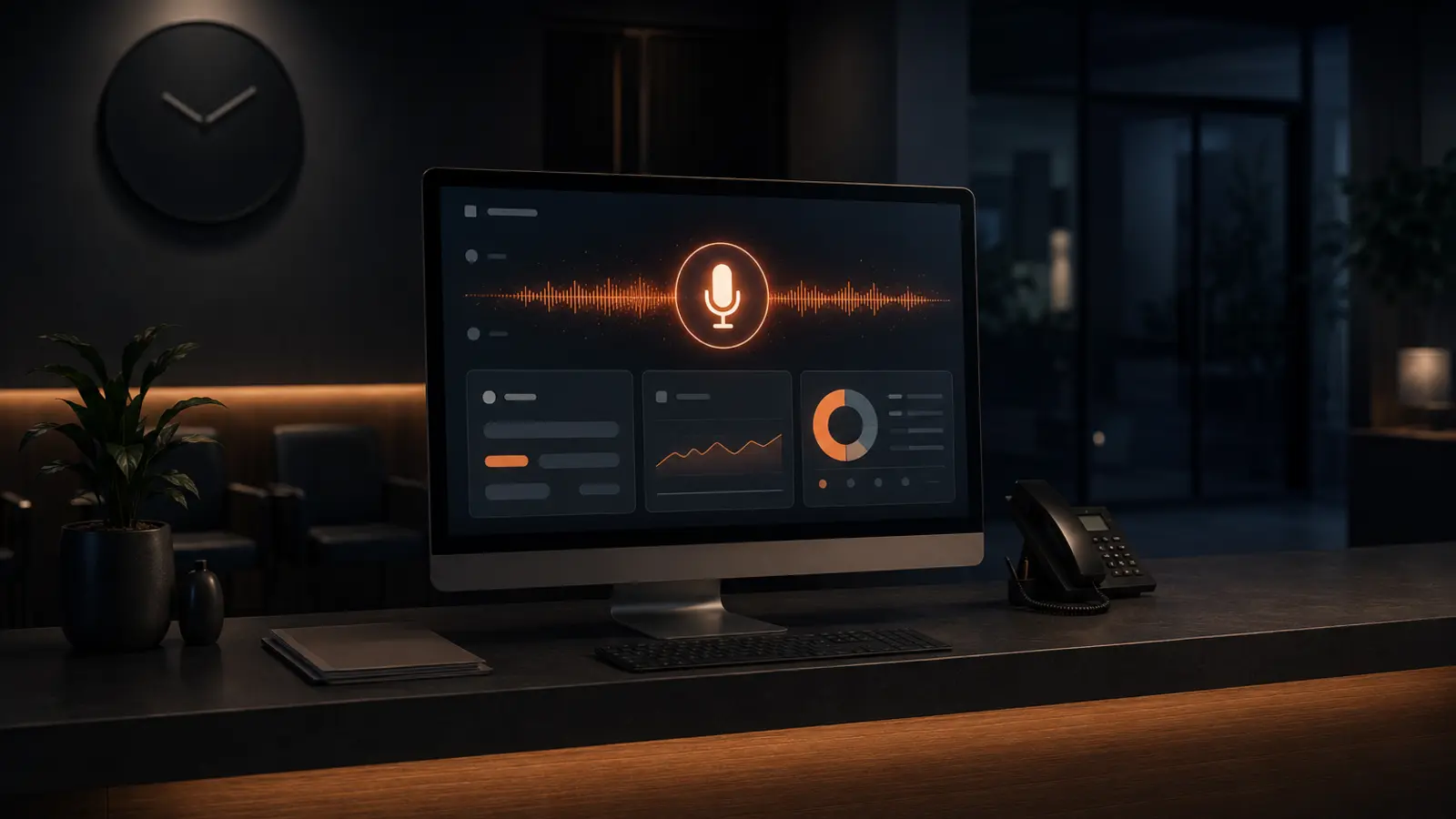
4. Ambient AI Scribes That Give Doctors Their Day Back
Documentation is the tax on every clinic day. Ambient AI scribes listen to the natural conversation between doctor and patient and draft the note in real time — so the physician talks to the patient instead of the keyboard, and the chart is essentially done before the next patient is in the chair.
The practice-level impact compounds: more patients per template without feeling rushed, less after-hours charting, better face-to-face patient experience, and doctors who end the day less burned out. For a surgical practice, freed clinic capacity flows directly to the top of the surgical funnel.
5. AI-Assisted Diagnostics and Earlier Disease Detection
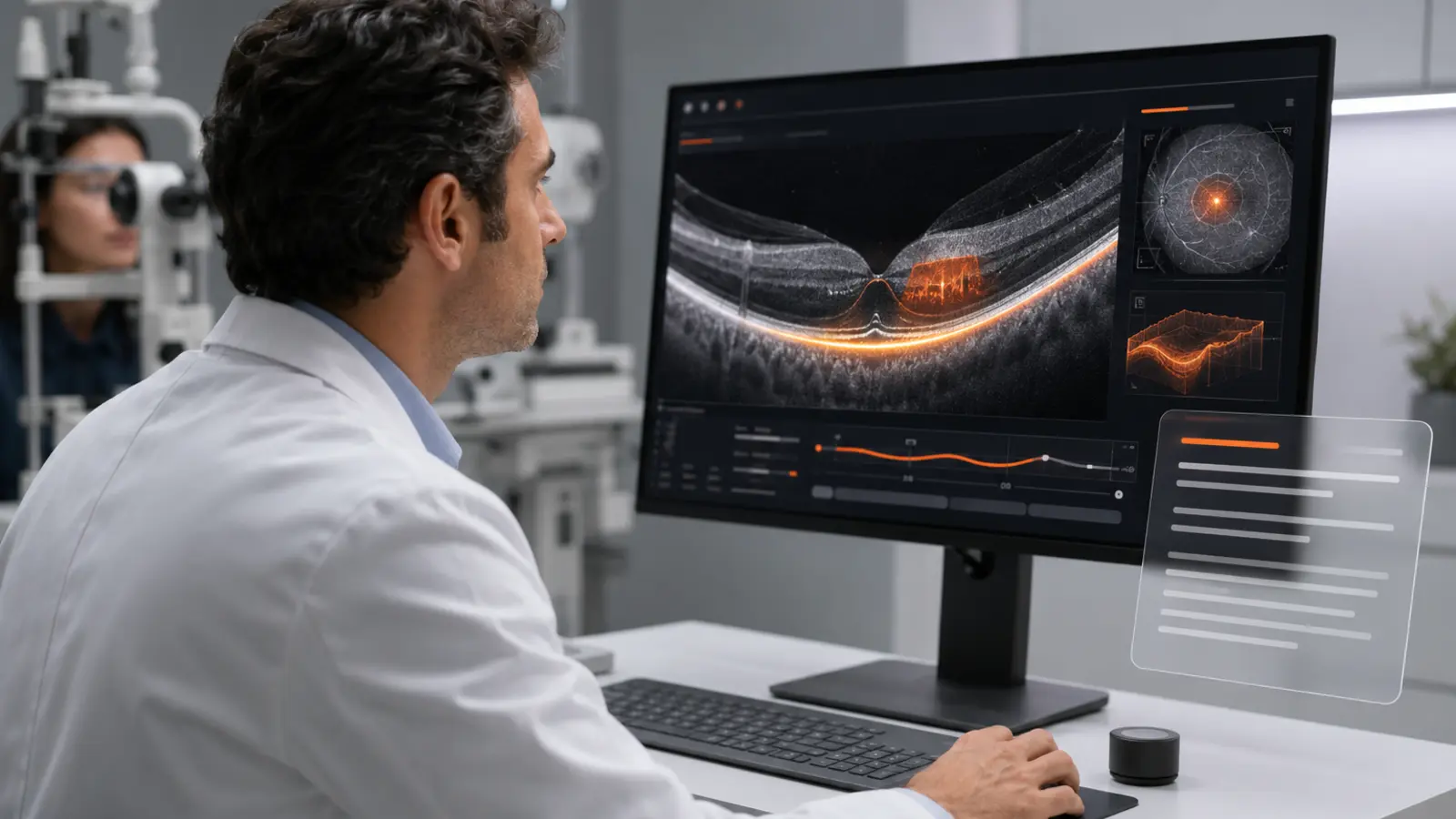
Ophthalmology is arguably the most AI-advanced specialty in medicine. FDA-cleared autonomous AI systems can screen for diabetic retinopathy from retinal images without a specialist reading each one, and AI-supported interpretation of OCT and fundus imaging helps flag glaucoma, AMD, and other pathology earlier and more consistently.
For patients, that means disease caught sooner. For the practice, it means screening programs that scale, referral relationships built on real clinical value, and earlier identification of the cataract and retina patients who will need surgical care. Clinical AI should always operate under physician oversight — but as a force multiplier for a busy practice, it’s already here.
6. Smarter IOL Selection and Surgical Planning
Refractive outcomes drive premium-lens confidence, and AI is quietly improving them. Machine-learning IOL power calculation methods and AI-assisted surgical planning tools analyze far more variables than traditional formulas, helping surgeons hit refractive targets more consistently — including in the tough eyes: post-refractive corneas, extreme axial lengths, unusual anterior segments.
Better predictability isn’t just a clinical win. It’s a commercial one: surgeons who trust their outcomes present premium lens options with more conviction, and patients hear the difference.
7. AI Patient Education That Actually Converts
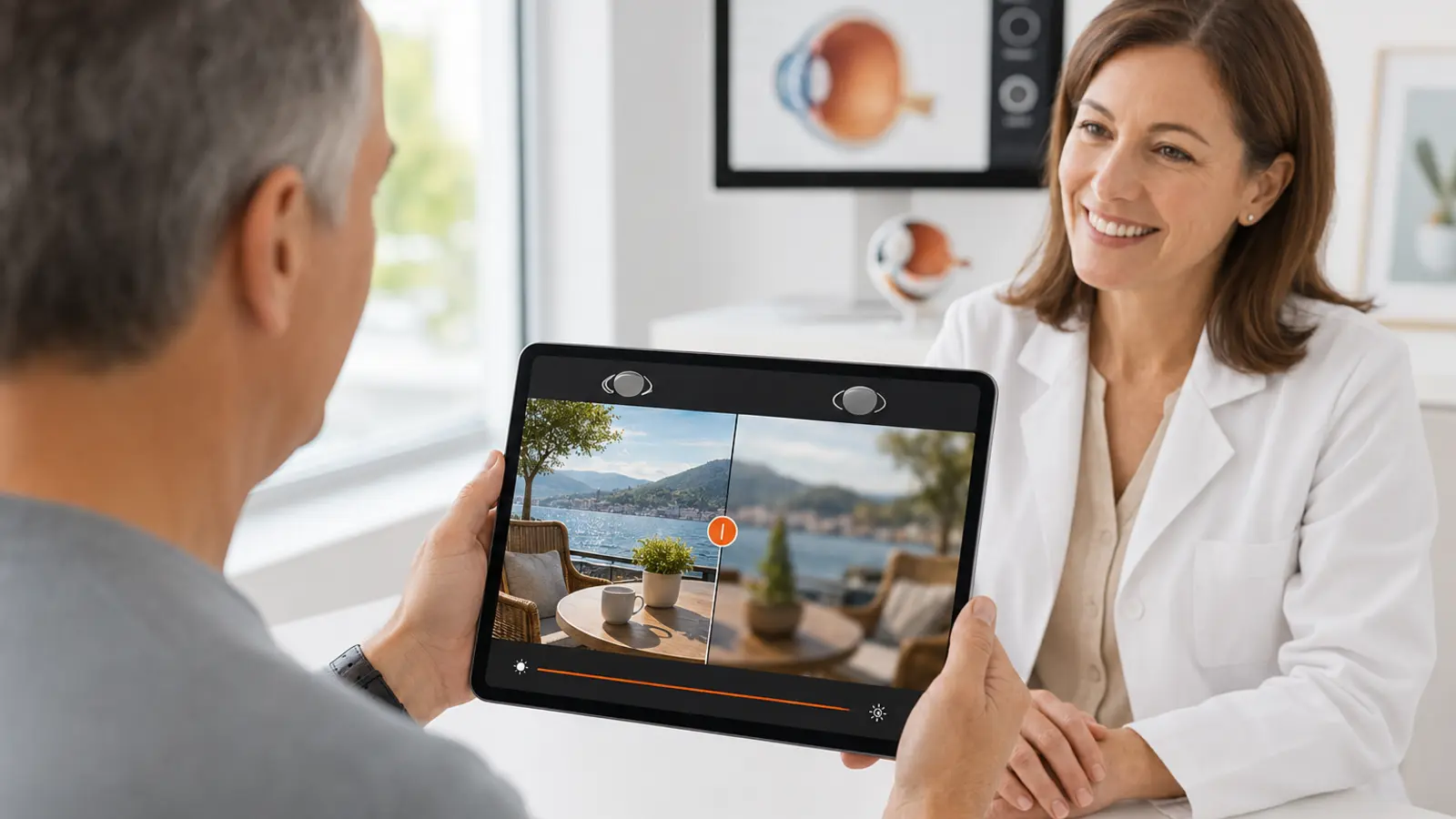
Handing a cataract patient a trifold brochure about lens options is a 1995 solution to a 2026 decision. AI-powered education tools — interactive vision simulators, avatar-based counselors, personalized video explanations — let patients see the difference between a monofocal and an extended-depth-of-focus lens, or experience what their vision could look like after LASIK, before they ever sit down with the surgeon.
A pre-educated patient is a better consultation: they arrive with realistic expectations, better questions, and far less fear. Practices using interactive education consistently report smoother conversations about premium options — because the patient isn’t hearing about them for the first time while holding a fee sheet.
8. Marketing Content and Video at Scale
The practices dominating local search and social media aren’t necessarily bigger — they publish more, and more consistently. AI-assisted production has collapsed the cost of doing that: blog articles grounded in the surgeon’s actual expertise, educational videos, social clips cut from a single filming session, email campaigns, and ad variations — produced in days, not quarters.
The critical caveat: volume without expertise is noise, and both Google and AI answer engines are getting better at ignoring it. The winning formula is the surgeon’s genuine knowledge, structured and amplified by AI, reviewed for accuracy — which is exactly how we approach video production and content for our clients. AI is the multiplier; the doctor’s expertise is the substance.
9. Predictive Scheduling, Recall, and the Revenue Hiding in Your EHR
Your next hundred cataract surgeries are probably already in your database. AI-driven recall and scheduling tools find them: the patient told “let’s watch that cataract” three years ago who never came back, the diabetic overdue for screening, the appointment slots statistically likely to no-show that can be backfilled from an automated waitlist.
This is the least glamorous item on the list and often the fastest payback, because it monetizes demand you already generated. Fewer empty slots, fuller surgical schedules, and reactivated patients who genuinely needed the care — without a single new ad dollar.
10. Reputation and Review Intelligence
Reviews now feed two audiences: prospective patients and the AI platforms deciding whether to recommend you. AI reputation tools monitor sentiment across Google, Healthgrades, and social platforms, draft timely and compliant review responses, and — most valuably — surface the patterns: if thirty reviews in six months mention hold times or a rushed checkout, that’s not a marketing problem, it’s an operations report written by your patients.
Practices that respond consistently and fix the recurring issues build exactly the kind of review profile that both patients and answer engines reward.
AI won’t replace your practice. But practices using AI will replace practices that don’t.
Where Should a Practice Start?
Not with all ten. The right sequence starts where leverage is highest and risk is lowest — the front of the funnel and the phone — then works inward toward clinical workflows.
A Practical First 90 Days
- Measure first: run AI call analysis and an AI-search visibility test. You can’t fix what you haven’t seen.
- Fix discoverability: strengthen the website, listings, and content so AI platforms can confidently recommend you.
- Stop the leaks: add after-hours AI answering and structured phone training where the call data shows fumbles.
- Then scale: layer in patient education tools, content production, recall automation, and clinical AI as workflows mature.
The common thread across all ten: AI rewards practices that were already well-run. Clear services, accurate data, trained people, and measured results give every one of these tools something to multiply.
Frequently Asked Questions
How is AI used in ophthalmology practices today?
AI is used across both the clinical and business sides of ophthalmology. Clinically, that includes FDA-cleared screening for diabetic retinopathy, AI-supported interpretation of OCT and fundus imaging, ambient AI scribes that draft exam documentation, and machine-learning IOL calculation methods. On the business side, practices use AI for search visibility, 24/7 phone and chat agents, call analysis and scoring, patient education simulators, content and video production, predictive scheduling and recall, and reputation management.
Will AI replace ophthalmologists or practice staff?
No. Clinical AI tools operate under physician oversight and act as force multipliers, not replacements — flagging pathology, drafting documentation, and improving calculation accuracy while the doctor makes the decisions. On the business side, AI agents catch the calls and inquiries a human team physically can’t, such as after-hours and overflow, rather than eliminating front-desk roles. The realistic risk isn’t AI replacing a practice; it’s competitors using AI to out-answer, out-publish, and out-convert a practice that doesn’t.
What is the best first AI investment for an ophthalmology practice?
Start with measurement: AI call analysis and an AI-search visibility test. Call analysis shows exactly how many inquiries your practice already generates and how many are being lost on the phone, and a visibility test shows whether platforms like ChatGPT and Google AI Overviews recommend you. Both reveal high-return fixes — after-hours answering, phone training, website and listing improvements — that recover revenue from demand you already have before you spend more on advertising.
Does AI help an ophthalmology practice get more patients?
Yes, in several compounding ways. AI search visibility puts the practice inside the recommendations patients now ask for. AI agents answer and book inquiries instantly, including after hours. Call analysis and phone training raise the percentage of inquiries that become consultations. Patient education tools improve consult-to-surgery conversion. And recall automation reactivates patients already in the practice’s database who are due or overdue for care.
Is AI-generated content safe to publish on a medical practice website?
Only with expert oversight. Search engines and AI answer platforms increasingly reward content that demonstrates genuine, verifiable expertise and ignore generic mass-produced material. The safe and effective approach is using AI to structure and scale the surgeon’s actual knowledge, with every piece medically reviewed for accuracy and free of guarantees or unsupported claims. AI is the production multiplier; the physician’s expertise is the substance.
How much does it cost to bring AI into an ophthalmology practice?
It varies widely by tool, from modest monthly software subscriptions for call analysis, chat agents, or reputation monitoring to larger investments in clinical systems and website rebuilds. The more useful framing is payback: tools that recover missed calls, reactivate dormant patients, or lift consultation conversion typically pay for themselves out of cases that would otherwise have been lost. A phased 90-day rollout lets a practice fund later phases from the returns of earlier ones.
The Practices That Move First Get Named First
Every change in this article shares one trait: it compounds. The practice that starts answering every call today has six months of recovered leads by January. The practice that builds AI-search visibility now gets recommended while competitors are still debating whether AI matters. Waiting doesn’t preserve the status quo — it hands the advantage to whoever moves first in your market.
Denali Creative helps ophthalmology practices put the growth side of this list to work — SEO & AEO, AI marketing strategy, AI call analysis, phone training, video, and conversion-focused website design — as one coordinated system instead of ten disconnected tools.
Find out where AI can move your practice first
We’ll assess your AI-search visibility, your phone conversion, and your patient acquisition funnel — and show you which of these ten changes would pay back fastest in your market.
Request an AI practice assessment →