Why Video Matters More Than Ever for Refractive Surgery Marketing

Company News

Paul Stubenbordt Selected to Present at the 2026 ASOA Annual Meeting

April 9, 2026Denali Creative5 min read

We are excited to share that Paul M. Stubenbordt of Denali Creative – A Stubenbordt Company has been selected to present at the 2026 ASOA Annual Meeting in Washington, DC.

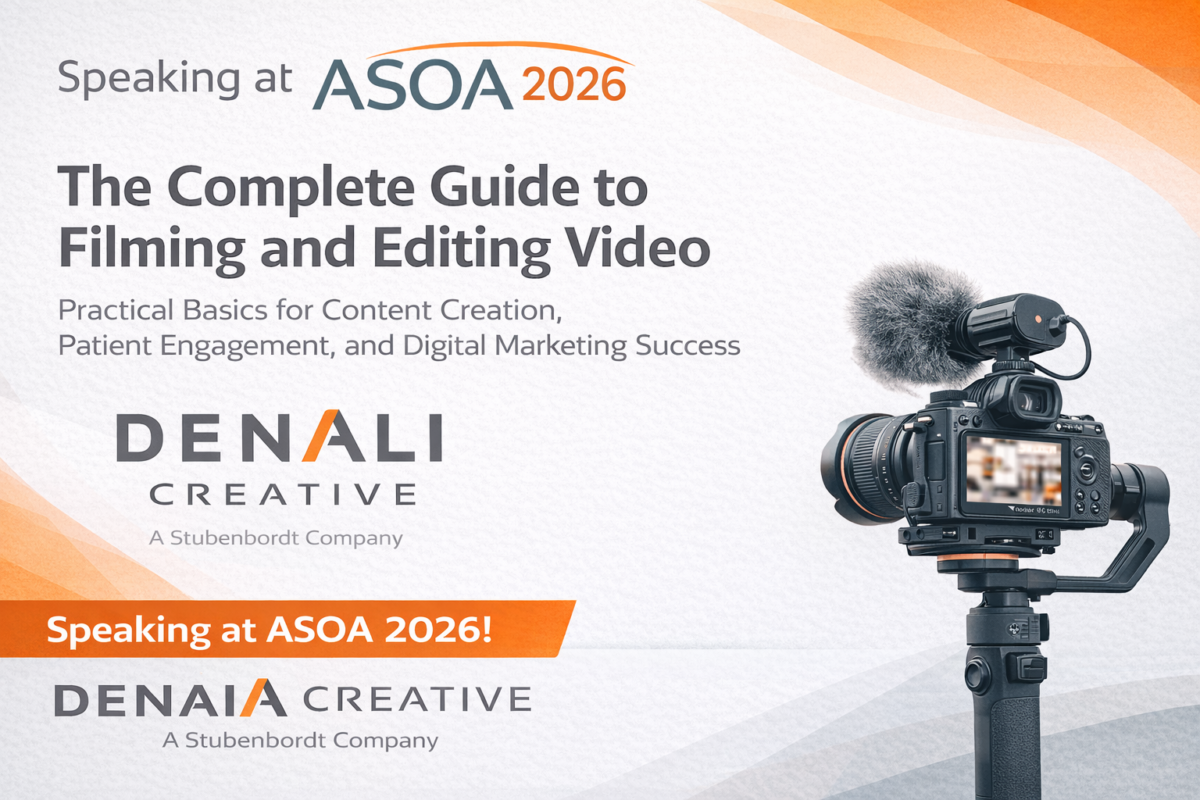
Paul’s session, “The Complete Guide to Filming and Editing Video: Practical Basics for Content Creation, Patient Engagement, and Digital Marketing Success,” will be presented on April 10, 2026, from 2:45–3:45 PM at the Walter E. Washington Convention Center.

Why Video Matters for Ophthalmology

This is a timely topic for ophthalmology practices, especially those focused on refractive surgery. Video has become one of the most important tools in modern healthcare marketing because it helps practices connect with patients in a way that is clear, personal, and easy to understand. In a world where attention is limited and competition is high, video gives practices a stronger way to explain procedures, build trust, and stay visible across multiple platforms.

For refractive surgery practices, that matters more than ever. Procedures like LASIK, EVO ICL, refractive lens exchange, and premium cataract options often require a higher level of education and patient confidence before someone is ready to schedule a consultation. Patients are not just looking for a provider. They are looking for reassurance, expertise, and answers. Video helps deliver all three.

Beyond Social Media

It also plays a critical role far beyond social media. Yes, video is one of the most effective formats for platforms like Instagram, Facebook, YouTube, and TikTok. But it is also increasingly important for patient education, website engagement, brand positioning, and Answer Engine Optimization (AEO). As patients rely more on AI-driven search experiences, voice search, and conversational tools to find information, practices need content that is easy to understand, easy to surface, and genuinely helpful. Video supports that shift by making complex topics more accessible and more engaging.

Video is no longer optional. It is part of how modern practices communicate.

A well-done video can answer frequently asked questions, reduce anxiety, explain technology, introduce doctors, showcase patient stories, and help differentiate a practice from competitors. It can be used throughout the patient journey, from awareness and consideration to consultation and conversion.

What to Expect from the Session

Paul’s ASOA presentation will focus on practical, real-world strategies for creating better video content without overcomplicating the process. The session is designed to help ophthalmology administrators, marketing teams, and practice leaders better understand how to approach filming, editing, equipment, workflows, and content strategy in a way that supports both patient engagement and business growth.

At Denali Creative, we have seen firsthand how effective video can be when it is used intentionally. It is one of the strongest tools a refractive surgery practice can invest in because it combines education, trust, visibility, and conversion into one powerful medium.

We are honored to be part of this year’s ASOA program and look forward to connecting with attendees in Washington, DC.

Session Information

Title: The Complete Guide to Filming and Editing Video: Practical Basics for Content Creation, Patient Engagement, and Digital Marketing Success

Presented by: Paul M. Stubenbordt

Date: April 10, 2026

Time: 2:45–3:45 PM

Venue: Walter E. Washington Convention Center, Washington, DC

Ready to elevate your practice?

Learn how Denali Creative helps ophthalmology and dental practices grow with strategy, content, and digital marketing.

Get in touch

Denali Creative Launches “The Marketing Doctor” on YouTube: A New Resource for Ophthalmology Marketing, Business Development, and AI

Denali Creative Launches “The Marketing Doctor” on YouTube: A New Resource for Ophthalmology Marketing, Business Development, and AI

If you work in ophthalmology—whether you’re an owner, administrator, surgical director, counselor, optometric liaison, or part of a leadership team—you already know the truth: running a high-performing practice requires more than excellent clinical outcomes. Growth depends on systems. Messaging. Patient education. Reputation. Referral relationships. Digital presence. And the ability to execute consistently, month after month.

That’s why we’re excited to announce the launch of our brand-new YouTube channel:

The Marketing Doctor
Handle: @AIMarketingDoc
Created by: Denali Creative

This channel is built specifically for the ophthalmology space, with a practical focus on business development and marketing systems that drive real volume, not vague theory.

Watch the First Video Below

If you work in ophthalmology and want stronger, more consistent growth—subscribe to The Marketing Doctor (@AIMarketingDoc) and watch Episode 1 today:
https://youtu.be/fBJbGNPzUFE?si=S8Tlpes1zJYZiUaP

What is The Marketing Doctor?

The Marketing Doctor is a YouTube series dedicated to the marketing and business development side of ophthalmology—how practices actually grow in competitive markets, how teams structure a premium patient experience, and how leadership builds sustainable momentum without relying on guesswork.

At Denali Creative, we work closely with elective-medicine practices, and we’ve seen the same pattern repeatedly: the practices that win are not always the ones spending the most money—they’re the ones executing the right strategy with operational discipline.

This channel is designed to help you do exactly that.

AI is not the future. It’s the now.

A core theme of The Marketing Doctor is simple: AI is no longer a “someday” technology. It’s a right-now competitive advantage. The practices and marketing teams who learn to use AI responsibly and effectively will move faster, operate leaner, and make better decisions.

That’s why we’ll cover AI in a practical, real-world way—beyond hype—focused on workflow, efficiency, and measurable outcomes.

Here are just a few of the AI-driven topics you’ll see on the channel:

AI SEO for ophthalmology practices

SEO is changing fast, and AI is reshaping how content is created, structured, and optimized. We’ll cover how to use AI to:

  • Build service-line and location content at scale (without sacrificing quality)
  • Improve on-page SEO, internal linking, and topical authority
  • Strengthen E-E-A-T signals with better structure and supporting content
  • Identify quick-win gaps and prioritize pages that drive consults

AI image and video generation for marketing

High-quality creative is a growth lever—but traditional production can be slow and expensive. We’ll break down how AI can accelerate:

  • Image generation for ads, landing pages, and blog content
  • Video generation concepts and workflows for short-form and long-form content
  • Creative testing at scale (more variations, faster iteration)
  • Brand consistency and compliance considerations in healthcare marketing

How to analyze reports with AI

Most practices have dashboards, call logs, ad reports, GA4, and conversion data—but turning data into action is the real challenge. We’ll show how to use AI to:

  • Summarize performance reports and identify what matters
  • Spot trends in lead quality, call outcomes, and conversion drops
  • Turn messy data into clear executive summaries and action items
  • Build repeatable “weekly reporting” and “monthly insights” workflows

The future of AI phones and patient conversion

The next wave of patient acquisition is not just ads—it’s what happens when a patient calls or texts. We’ll talk through the real implications of:

  • AI phone systems and call intelligence
  • After-hours lead capture that still feels human
  • Coaching and QA for call handling using AI insights
  • How “AI-assisted” front desk workflows can improve conversion without losing warmth

AI marketing automations and patient acquisition workflows

Automations are where practices can win back time and reduce leakage. We’ll cover how AI can support:

  • Lead routing and follow-up systems
  • Nurture sequences for cataract, refractive, and premium lens candidates
  • Review generation workflows that improve reputation consistently
  • Operational automations that reduce admin load and improve patient experience

Our goal is to keep it practical: what tools matter, what workflows work, and how to implement AI in a way that improves speed, quality, and consistency.

Why we launched this channel now

Ophthalmology is evolving quickly. Patients are more informed, more skeptical, and more price-sensitive—yet still willing to invest in premium care when it’s presented ethically and effectively. At the same time, competition has intensified:

  • More practices are investing in Google Ads, SEO, and social
  • Premium IOL and refractive lens messaging is everywhere
  • Optometric referral networks are more relationship-driven than ever
  • Reviews, reputation, and patient experience are now growth levers—not afterthoughts

In this environment, the old approach—“run ads and hope it works”—is not enough.

The Marketing Doctor exists to give ophthalmology teams a clearer playbook—now including how to leverage AI in the real world.

What we’ll cover on The Marketing Doctor

In addition to our AI focus, the channel will consistently deliver practical guidance on:

  • Ophthalmology marketing strategy and positioning
  • Patient acquisition systems and lead conversion
  • Google Ads for ophthalmology (structure, budgets, landing pages, tracking)
  • SEO for eye care practices (service line + location dominance)
  • Optometric referral growth and outreach strategy
  • Premium IOL and refractive messaging that supports confident decisions
  • Operations and staffing structure that protect patient experience

Watch Episode 1: A candid conversation on running a high-performing cataract practice

Our first episode is live now, and it sets the tone for what this channel is about: real insights from real ophthalmology professionals.

Watch Episode 1 here:
https://youtu.be/fBJbGNPzUFE?si=S8Tlpes1zJYZiUaP

In this episode, we sit down with Elizabeth Wagner, Surgical Director at Insight Eye Center in Mentor, Ohio, for a practical conversation about what it takes to run an efficient, high-performing cataract practice—without relying on heavy marketing spend.

Who this channel is for

The Marketing Doctor is built for people who live in the real world of ophthalmology practice growth, including:

  • Ophthalmologists and practice owners
  • Administrators and executive directors
  • Surgical directors and ASC leadership
  • Patient counselors and refractive teams
  • Optometric liaisons and outreach staff
  • Marketing managers inside practices

If your job touches growth, volume, patient experience, or premium conversion, this channel is for you.

Subscribe and follow along

If you want practical content on ophthalmology marketing, business development, SEO, Google Ads, referral growth, and AI-powered workflows, subscribe here:

YouTube: The Marketing Doctor – @AIMarketingDoc
Episode 1: https://youtu.be/fBJbGNPzUFE?si=S8Tlpes1zJYZiUaP

About Denali Creative

Denali Creative is a marketing and growth agency focused on elective medicine, with deep experience supporting practices in ophthalmology, dentistry, and other competitive healthcare categories.

We help practices grow through strategy and execution across:

  • Branding and positioning
  • Websites and landing pages built for conversion
  • SEO content systems
  • Google Ads and paid acquisition
  • Tracking, attribution, and lead quality optimization
  • Optometric outreach support and referral enablement
  • High-end video and content production
  • AI-driven marketing workflows and automation systems

Do You Have a LASIK Rainmaker?

It’s been almost 20 Years since my good friend Mike Malley wrote an article for CRS Today that changed the course of my Career, “The LASIK Rainmakers.” It’s an article that highlights the significance of hiring a well-trained, knowledgeable LASIK coordinator for a successful LASIK practice. A skilled LASIK coordinator not only understands the latest refractive developments but also listens to potential patients, creating realistic expectations, managing patient interactions, and converts potential patients to surgery. An example in this article emphasizes this role’s crucial impact, where a new LASIK coordinator (Me and Cory) significantly increased a practice’s surgical volume and average selling price within months. The article concludes by suggesting key attributes for a successful LASIK coordinator, including product knowledge, rapport-building and sales skills, honesty, confidence, and a vested interest in their work.

Read the full article HERE

A Detailed Strategy for Independent LASIK Providers: Outshining Corporate Discounters 

As the market of LASIK surgery grows more competitive, independent providers are often confronted with the challenge of keeping pace with larger corporate discount providers. With their substantial financial backing and high-volume business models, these corporate giants pose a formidable obstacle. But the good news is that independent providers can indeed hold their own and even excel with the right strategies. 

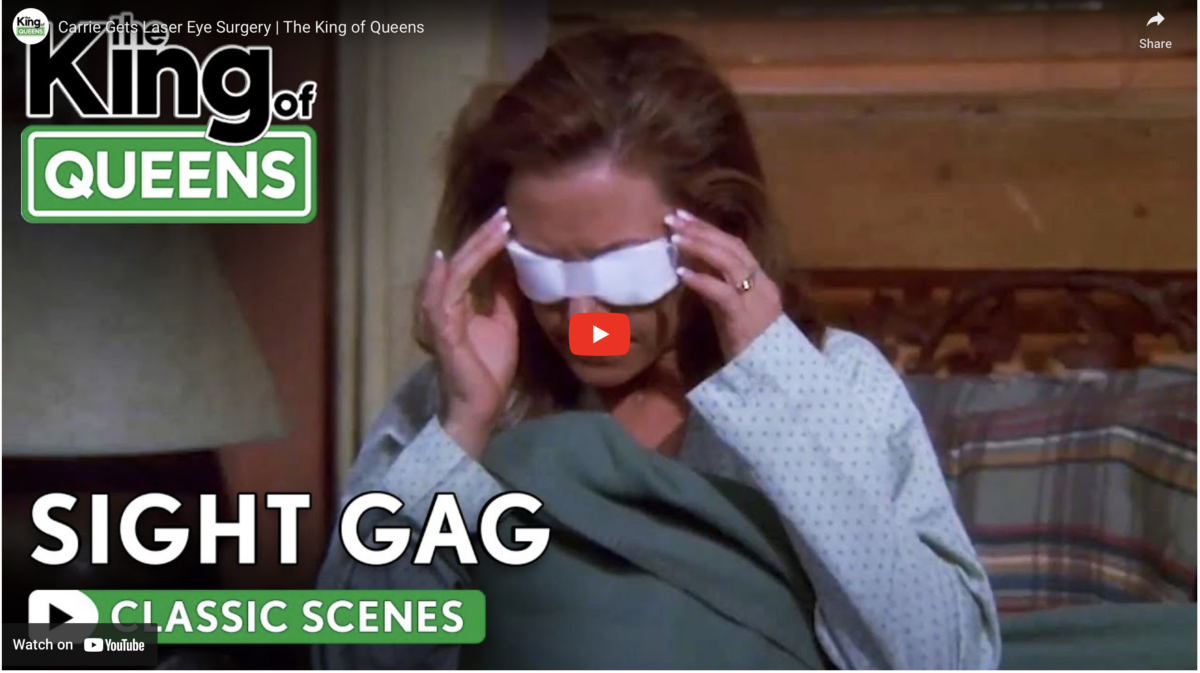
SEE WHAT HAPPENS WHEN CHEAP LASIK IS OFFERED AS A GIFT ON KING OF QUEENS:

1. Prioritize Personalization and High-Quality Service

One of the most significant advantages that independent LASIK providers hold over corporate entities is the capacity to provide personalized service. Make sure to invest time in each patient, grasp their specific needs, and customize your services to cater to these individual requirements. This one-on-one interaction not only builds trust and a robust rapport with your patients, but it also increases their satisfaction and loyalty towards your service. Let patients know they will meet with the surgeon beyond just the surgery, they will meet the surgeon during the initial consultation and post-op visits as well vs a visiting physician that covers multiple locations for corporate practices.  

2. Construct a Robust Brand Identity

In the face of fierce competition, brand differentiation becomes a powerful tool. Your brand identity should effectively communicate your core values and mission statement. Every practice has its own unique story and perspective. Embrace this individuality and let it shine through in your brand, whether that means focusing on bespoke care, cutting-edge technology, or a specific surgical expertise or training that sets you apart.

3. Champion Patient Education

Patients considering LASIK surgery often carry a mix of misconceptions and anxieties. While the low costs of discount providers might seem attractive, they are also seeking reassurances regarding safety and efficacy. Utilize your digital platforms, such as your website and social media, as well as your in-person consultation sessions to deliver factual, comprehensive, and easily understandable information about the procedure. Helping your patients make an informed decision will strengthen your relationship with them. Let them know you aren’t a bait and switch practice, that there are no hidden fees, and the price won’t change based on RX or technology.

4. Harness the Power of Advanced Technology

In the world of LASIK surgery, the role of technology is pivotal. Incorporating the latest and most effective equipment in your practice can significantly improve your services. Such an upgrade can lead to more successful outcomes, faster recovery times, and a reduced risk of complications, which will inevitably attract more patients to your clinic. It’s essential to view this as a long-term investment, the rewards of which are multiple. For patients over 50, let them know you’re more than just a LASIK practice and also offer Refractive Lens Exchange (RLE) might be a better long-term solution for their visual goals. After all, it may allow them to see at most distances, even up close, with little to no dependance on glasses. Plus, they never have to worry about cataract surgery in the future. 

5. Deliver Outstanding Follow-Up Care

Corporate discount providers, due to their high-volume model, often compromise on the quality of follow-up care. This is your opportunity to outshine them. Offer thorough follow-up care to ensure better patient outcomes, reduce complications, and foster higher patient satisfaction. This heightened level of care can improve patient loyalty and increase your chances of receiving referrals.

6. Leverage Patient Testimonials and Reviews

The power of positive patient testimonials and reviews in shaping your reputation and attracting new patients is immense. Encourage your satisfied patients to share their experiences online or through word-of-mouth. To make this process effortless for them, send links to review sites via email or text messages. Showcasing these reviews on your website or social media platforms will help foster trust among potential patients.

7. Formulate a Comprehensive Digital Marketing Strategy

In the digital age, a strong online presence is key to reaching your potential patients. Your website should be search engine optimized, your social media engagement should be consistent, and online advertising should be considered as part of your marketing budget. By effectively highlighting your unique selling propositions and showcasing patient success stories, you can reach a broader audience and strengthen your stand against corporate discounters. You know the old riddle? “Where’s the best place to hide a dead body? Page 2 of Google, because no one will ever find it!”

8. Build Synergistic Collaborations 

Collaboration is a potent tool in the healthcare industry. Build alliances with other healthcare providers, such as optometrists and ophthalmologists, to establish a strong referral network. This partnership can offer a steady influx of patients to your practice, benefiting all parties involved, and giving your practice an edge in the competitive landscape.

While competing with corporate LASIK discount providers may appear overwhelming, independent clinics can not only survive but thrive. By leveraging their strengths like personalized care, superior patient education, comprehensive follow-up, and advanced technology, they can create a distinctive niche in the market. Implementing these strategies will help independent LASIK providers maintain and expand their patient base, securing their position in the competitive field.

Conclusion

The truth is, no one wants to budget when it comes to their vision. But it’s up to you, the solo provider to show how your practice differs from a corporate discount LASIK program. All in all, patients just don’t have a clue when it comes to what is shown to them in advertisements. Spend time to educate them on their choices and why they should choose your practice for their unique vision. 

An Important Lesson : The Crucial Role of Infrastructure and Approach in a RLE Campaign

In the bustling city of Dallas, a successful ophthalmology practice initiated an aggressive campaign to promote their refractive lens exchange (RLE) procedure. With a robust Google AdWords strategy, they generated over 90 leads, signaling a high potential for business expansion. They even utilized Opticall, a professional service adept at handling calls, managing to schedule 13 consultations from the numerous leads. However, despite these promising numbers, the campaign stumbled and did not achieve its intended success. The reason: an inadequate infrastructure to cater to elective surgery patients and an approach that may have prematurely screened out potential patients.

What is Refractive Lens Exchange (RLE) Procedure?

Refractive Lens Exchange (RLE), also known as Clear Lens Exchange (CLE), is a surgical procedure that aims to improve refractive errors by replacing the natural lens of the eye with an artificial one. It’s primarily used to correct presbyopia (age-related long-sightedness) and high myopia (nearsightedness), but it can also be utilized for other refractive errors such as hyperopia (farsightedness) and astigmatism. RLE is typically performed in place of LASIK due to high prescriptions or due to age. Often, patients over the age of 50 might be a better RLE patient vs LASIK, due to near vision loss or presbyopia. Patients that undergo the refractive lens exchange procedure never have to worry about cataracts, because the natural lens of the eye where cataracts form is replaced by an artificial lens implant or IOL. 

Cost & Failure

The RLE campaign aimed to draw in those seeking alternatives to LASIK vision correction, albeit at a significantly higher cost – more than double that of a typical LASIK procedure. In an attempt to set clear expectations about the cost difference, the practice even made proactive calls to patients. However, this transparency, while admirable, was detrimental to the campaign’s success. 

While Opticall efficiently managed the influx of calls and booked consultations, the practice was unprepared to offer the VIP treatment that elective surgery patients typically anticipate. This was due to the refractive coordinator already seeing close to 250 cataract patients a month for premium IOL education and possible conversion. 

LASIK, RLE and other elective procedures are often perceived as luxury treatments, and patients rightfully expect a premium, highly personalized experience. The practice’s failure to provide this individualized journey proved unsuccessful.

Furthermore, the practice’s refractive coordinator undertook the task of “weeding out” potential patients in the pre-consultation phase, after Opticall booked the initial consultations. In good faith, the refractive coordinator because of his already busy schedule, called the booked consultations, educated them briefly on RLE and went over pricing. Again, more than 2x the cost of LASIK. Industry averages for LASIK range from $3500-$5000, while RLE ranges from $10,000-$12,000 for both eyes. Unfortunately, this misstep deterred most of the booked RLE patients, not giving them a chance to get approved for financing, (a key to RLE patient conversion) or seeing a doctor for Q&A. 

This approach led to only one patient from the initial 13 consultations being scheduled for surgery, suggesting a potential misstep in prematurely screening out potential surgical patients.  

For elective surgeries like RLE, the journey is seldom linear. It’s not just about calling, booking, and showing up for surgery. It involves a physical visit to the practice, in-depth understanding of the procedure benefits, and securing financing due to the high cost associated with RLE. In this case, the practice did not adequately facilitate these crucial steps, adding another layer of challenges to their campaign.

So, what can other practices learn from the experience of this Dallas-based ophthalmology practice?

First and foremost, it’s crucial to have a robust infrastructure. Running a campaign promoting an elective procedure requires a practice to deliver a VIP experience – from the first phone call to post-operative care.

Secondly, patient communication and guidance are vital. The process involves more than just providing information; it’s about leading patients through their journey, making them comfortable with their decisions, including facilitating their understanding of financing options. Remember, financing approval is the key to overcoming the price objection, in anything from cars, homes and RLE. 

Lastly, the patient journey must be managed holistically. From the physical visit to the discussions around financing, each touchpoint contributes to securing a patient’s commitment to the procedure.

The experience of this Dallas ophthalmology practice underscores that a well-orchestrated marketing campaign is only as successful as the service and infrastructure supporting it. Leads alone cannot ensure success if the practice is not fully equipped to cater to all the patients’ needs. In the realm of elective procedures, a comprehensive, patient-focused approach is essential to transform potential interest into committed patients.

The Future of SEO: Harnessing the Power of AI

As we hurtle headlong into an age where artificial intelligence (AI) underpins nearly every aspect of our lives, businesses are learning to adapt and harness this powerful technology for their specific needs. One area where AI has become particularly relevant is search engine optimization (SEO), the process of optimizing a website to maximize its visibility on search engine result pages (SERPs). Denali Creative, a Stubenbordt Company, understands the immense potential of AI and has made it a critical part of its SEO strategy.

The Role of AI in SEO

AI can be a game-changer for SEO in several ways.

Improved Keyword Research

Keyword research is one of the most critical aspects of SEO. AI can drastically improve this process by utilizing machine learning algorithms to predict search trends, identify high-value keywords, and understand the intent behind those keywords better. This kind of advanced keyword research can help businesses like Denali Creative create more relevant content, directly targeting their audience’s queries.

Enhanced User Experience

Google’s algorithms heavily favor websites that provide a good user experience, including factors such as site speed, mobile optimization, and content quality. AI can help in each of these areas. Machine learning can analyze user behavior to suggest improvements to site navigation, page layout, and load times. Natural Language Processing (NLP) algorithms can assess content quality and readability, providing insights for content improvement.

Personalization

Personalization is becoming increasingly important in digital marketing, and AI can greatly assist in this area. By analyzing user data and behavior, AI can help companies provide personalized content and recommendations, boosting engagement and conversions.

Predictive Analysis

Through machine learning, AI can provide predictive insights, helping companies anticipate changes in search behavior and trends. This ability to stay ahead of the curve can be a significant advantage in the ever-changing landscape of SEO.

AI and Denali Creative: A Perfect Partnership

Denali Creative – A Stubenbordt Company, a leading provider of digital marketing solutions, is well-poised to leverage the power of AI for SEO.

Data-Driven Approach

At the heart of Denali Creative’s operations is a data-driven approach that dovetails perfectly with AI’s capabilities. By applying AI to its rich datasets, the company can extract more actionable insights, improve its strategies, and deliver better results for its clients.

Content Strategy

Denali Creative understands the power of content in SEO. With AI, the company can fine-tune its content strategy. Using NLP algorithms, they can ensure that the content is not only keyword-optimized but also readable, engaging, and aligned with user intent.

Personalized Services

Denali Creative’s focus on providing personalized marketing solutions to its clients aligns perfectly with AI’s ability to personalize at scale. By utilizing AI, the company can deliver more personalized content and recommendations, enhancing its services and improving client satisfaction.

Future-Ready

AI has a rapidly evolving landscape with innovations cropping up regularly. Denali Creative, with its forward-thinking approach, is perfectly positioned to adopt these innovations, ensuring that its clients stay ahead of their competition in the SEO space.

In conclusion, the integration of AI technology into SEO practices offers immense potential. As the digital landscape becomes more competitive, companies like Denali Creative can utilize AI to streamline their SEO strategies, deliver more personalized services, and stay future-ready. The result? Enhanced visibility, improved engagement, and increased ROI for their clients.

How AI is Transforming Healthcare Marketing

A Glimpse Into The Future of Healthcare Marketing

The advent of artificial intelligence (AI) has brought about a radical shift in various industries and their operations. Healthcare is no exception. As a leading healthcare marketing firm, Denali Creative, a Stubenbordt Company, has pioneered the implementation of AI in innovative ways to enhance its healthcare marketing strategies. This article discusses how Denali Creative is leveraging AI’s power to revolutionize healthcare marketing and provide a more personalized, targeted, and efficient approach for its clients.

Predictive Analytics and Personalized Marketing

Understanding patient behavior is pivotal for creating effective healthcare marketing strategies. However, interpreting individual behaviors, needs, and preferences can be a Herculean task given the vast amounts of data involved. That’s where AI comes into play.

AI can analyze massive datasets to unearth patterns, trends, and correlations. It can predict patient behaviors based on their past actions, thereby helping healthcare organizations develop targeted marketing strategies. This AI-powered predictive analytics enables Denali Creative to anticipate patient needs and tailor marketing campaigns to meet them.

Through AI, we’re also able to take personalized marketing to a whole new level. By analyzing individual patient’s data, AI can develop a detailed profile, which then can be used to tailor-make marketing messages for that patient. The more targeted and personalized the marketing message, the more likely it is to resonate with the patient, leading to better engagement and ultimately better patient outcomes.

Optimized Resource Allocation

AI can optimize resource allocation, leading to more efficient and cost-effective marketing campaigns. AI algorithms can analyze the performance of previous marketing campaigns, considering variables like time, location, platform, and audience demographics, and suggest the optimal allocation of resources for future campaigns.

By leveraging AI in this way, Denali Creative ensures that every dollar spent on marketing provides the highest possible return on investment. This optimized allocation of resources can result in significant cost savings, allowing the funds to be redirected to other critical areas of healthcare operations.

Enhanced Patient Journey Mapping

Patient journey mapping is a crucial part of healthcare marketing as it helps in understanding the patient’s experience from their first interaction with the healthcare system to their final outcome. AI plays a crucial role in this by helping to create a detailed, data-driven patient journey map.

AI algorithms can track and analyze every step of the patient’s journey, providing valuable insights into their experiences, preferences, and pain points. This information can then be used to create a more seamless, patient-centric healthcare experience. Moreover, it can be used to identify gaps in the patient’s journey where targeted marketing efforts can be beneficial.

AI Chatbots and Virtual Assistants

AI-powered chatbots and virtual assistants are increasingly becoming an integral part of healthcare marketing. These tools can interact with patients in real-time, answering queries, providing information, and even scheduling appointments. This not only improves the patient experience but also allows healthcare organizations to engage with their patients in a more personalized and efficient manner.

Denali Creative has been harnessing the power of AI chatbots and virtual assistants to provide real-time, personalized interaction with patients, thereby improving patient engagement and satisfaction.

Conclusion

Artificial Intelligence has emerged as a game-changer in healthcare marketing. It allows for predictive analytics, personalized marketing, optimized resource allocation, enhanced patient journey mapping, and real-time interaction through AI chatbots and virtual assistants. Denali Creative, a Stubenbordt Company, is at the forefront of this revolution, utilizing AI to create more effective and patient-centric healthcare marketing strategies.

AI is more than just a tool; it’s an ally that enables healthcare organizations to connect with their patients in a more meaningful and efficient way. The future of healthcare marketing lies in